Showing posts with label biology. Show all posts

Wednesday, 3 September 2014

My A-level results

I found out my A-level results almost three weeks ago, and they were:
Biology: A
Psychology: B
German: B
Chemistry: A*

I was satisfied with the Biology and German results; I got a B in BIO4, so an A* was out of reach, and although I got an A in the German paper, my speaking was slightly weaker this year, so I'm still pleased with the result.

At first I was disappointed about the B in Psychology, but in hindsight I think there was a trade-off between Psychology and Chemistry, and ultimately, rather than revising to an A standard for both subjects, Psychology lost out while Chemistry gained. Before the start of the exam period I was hoping for an A* in Chemistry, but the horror of the F334 exam really dented my confidence, so this achievement was a brilliant surprise.

Thankfully, my UCAS Track status had been updated by the time I logged on at 8:03 am, so I knew that I'd been accepted by the University of Bristol before I found out my results. This was an immense weight off my mind, and now that I will definitely be studying pharmacology, it makes sense for this blog to undergo the same transformation, from bio-chem-psych-deutsch-student to something like pharmacology-student!

Friday, 25 April 2014

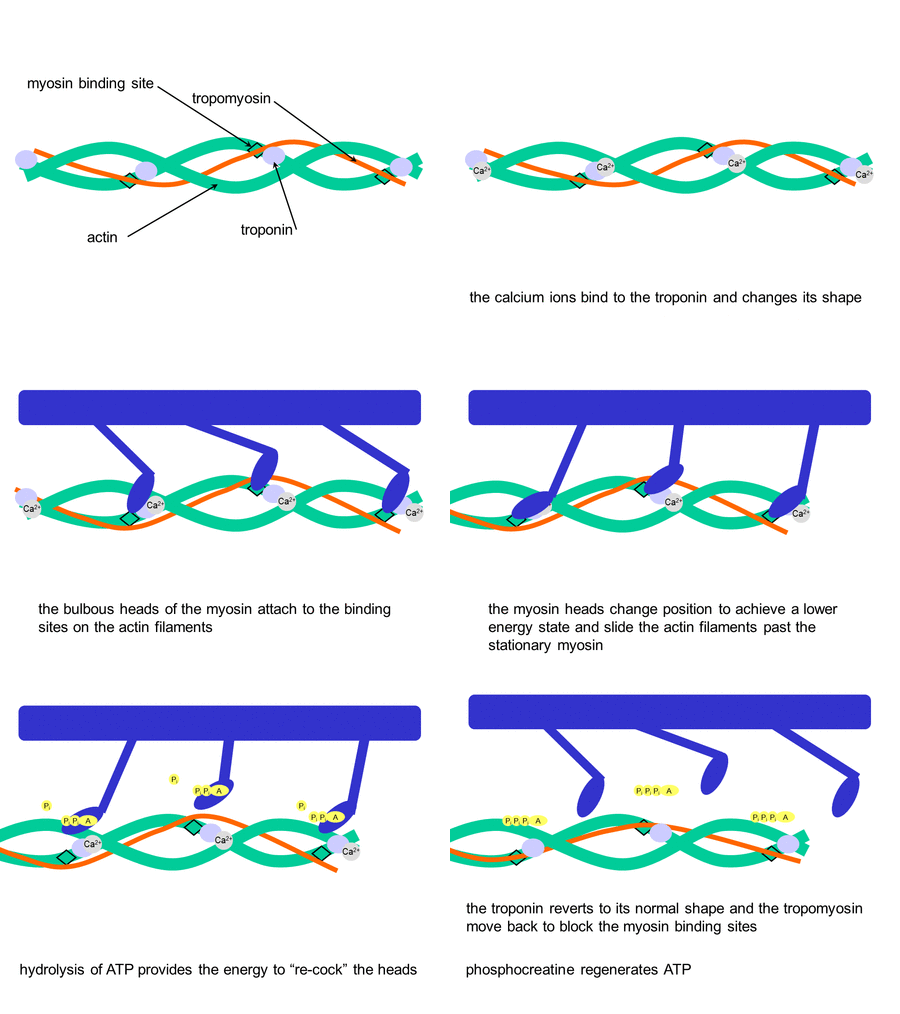
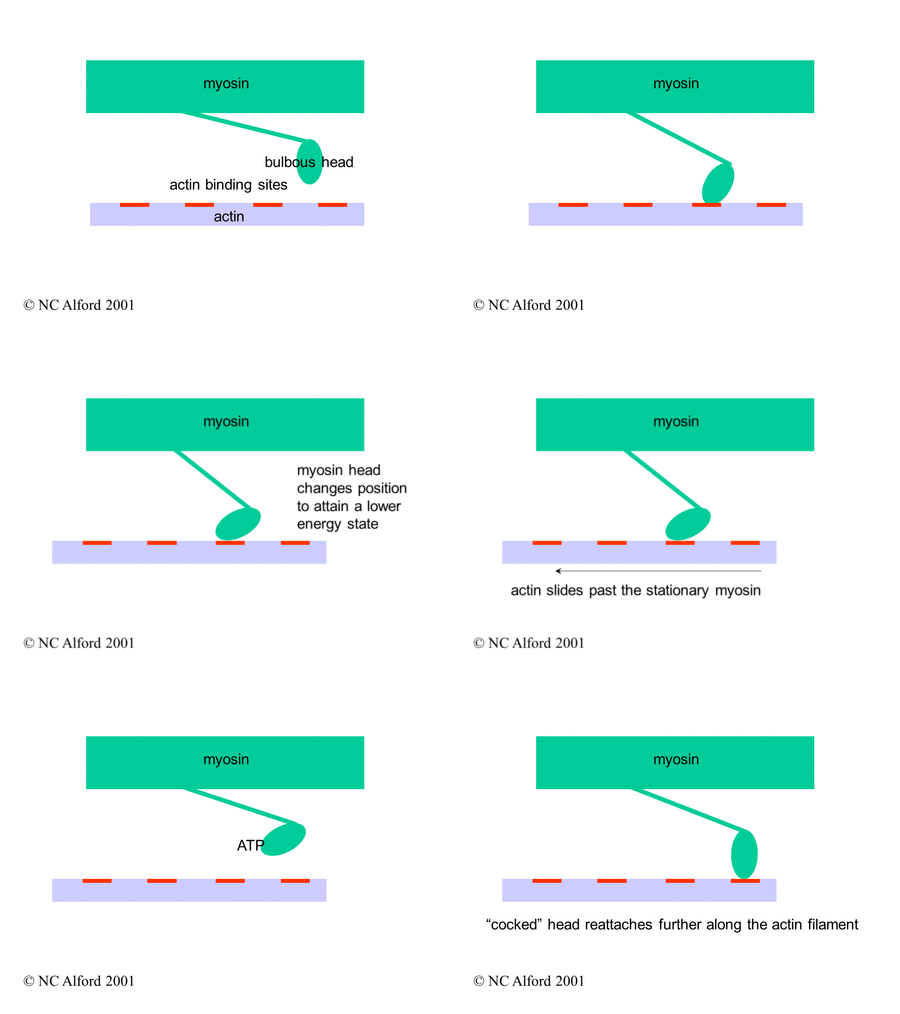
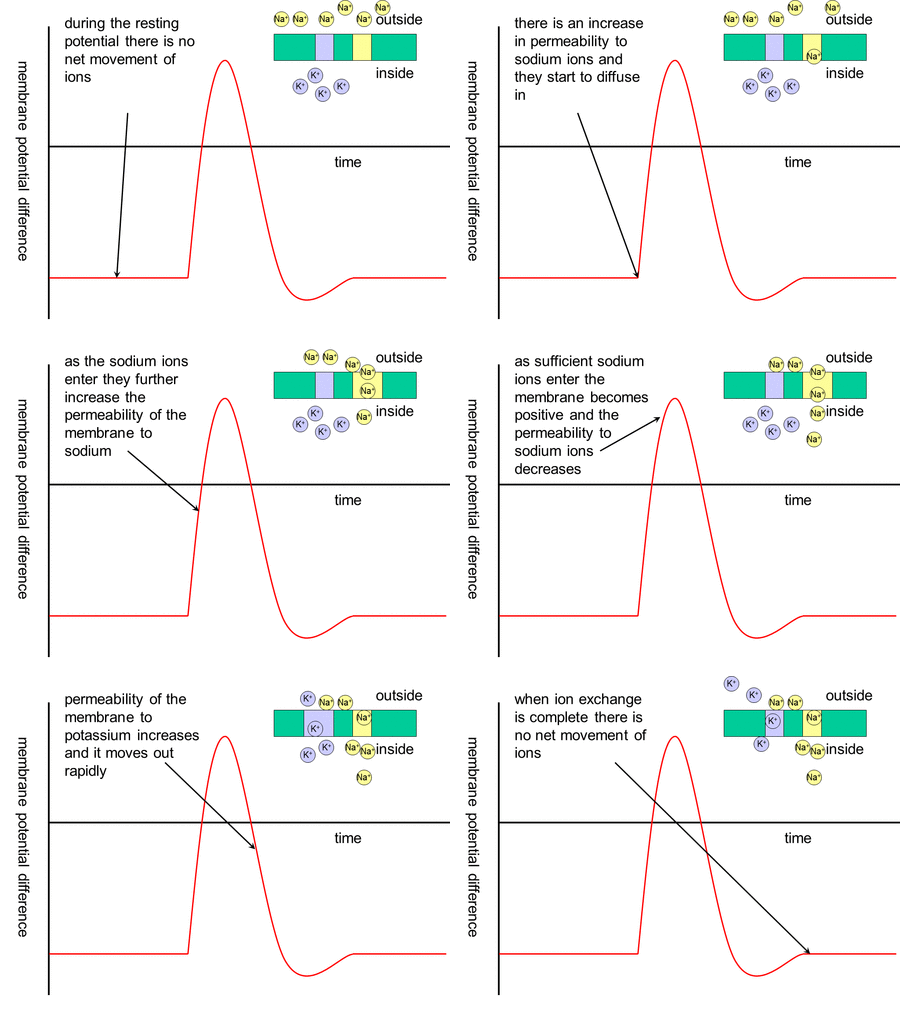
Biology gifs

Action potential
Sliding filament theory 1

Sliding filament theory 2

Saturday, 7 September 2013

Wider Reading: Behavioural Epigenetics

Grandma's Experiences Leave a Mark on Your Genes

This article introduces the idea that genetic information can be influenced by both nature and nurture, suggesting that life experiences are able to alter chemical signals to determine exactly which genes are transcribed. The field of epigenetics is concerned with  extra chemicals, such as the methyl group, which attach themselves to the genes that are necessary to produce the proteins required by the cell. Epigenetic changes can occur throughout life and can be triggered by a variety of factors, including diet, and can even be inherited, despite not actually being part of DNA itself; this is known as postnatal inheritance. A methyl group inhibits transcription of the gene it attaches to by tightening the DNA around the histone, making it much harder for DNA helicase to unzip this portion of DNA. To investigate the effect of life experiences on epigenetics, a natural experiment was conducted on rats whose mothers were either very attentive or very inattentive. This study found that genes regulating sensitivity to stress hormones were far more methylated the brains of those with inattentive mothers. This means that, for those with less attentive mothering, the genes which protect against the effects of stress were not transcribed as fully; therefore, the offspring were more susceptible to the effects of stress. In a follow up study, offspring of inattentive mothers were placed with attentive mothers and vice versa, and again the rats raised by the inattentive mothers had the most methylation in their anti-stress genes. Studies of human blood have shown that these changes can be present in humans too, and this could lead to the development of drugs to control or remove methyl groups, which may be useful in treating disorders such as depression. However, there are ethical issues with this type of treatment, most notably, is it right to alter inherited information?