Showing posts with label a-levels. Show all posts

Friday, 14 August 2020

A-level playing field?

Today, six years on from the day I received my A-level results, another cohort was just awarded their grades. Unlike those of us who came before, this year's crop weren't able to sit exams to earn the results, but have to settle for widely-criticised moderated grades, which were lower than teachers' estimates in almost 40% of cases. I can't help wondering what might've happened to myself and other high achievers at my school had the distribution of our grades depended on the school's past performance and largely ignored our own individual trajectories to GCSE and AS. 

I also wonder whether the bitter disappointment felt by so many this year would have been lessened if AS exams still counted towards the final A-level grade, because that would've allowed other forms of mitigation, such as students not dropping more than one or two grades below their AS result. I appreciate that there was not time to administer a replacement formal measure of progress over the 18 months of A-level education completed before schools closed, and not everybody would have achieved as highly as predicted, but surely there could have been a mechanism to submit work that the centre-assessed grades were based on for moderation instead?

Shifting the entire group based on performance of previous cohorts does not seem fair, particularly when many university places won't be held in time for appeals based on meaningful individual factors, such as mock grades. These results influence the course of lives, so it is unfathomable to me that pupils were marked down simply because a lower proportion of previous years' students achieved high grades.

Wednesday, 3 September 2014

My A-level results

I found out my A-level results almost three weeks ago, and they were:
Biology: A
Psychology: B
German: B
Chemistry: A*

I was satisfied with the Biology and German results; I got a B in BIO4, so an A* was out of reach, and although I got an A in the German paper, my speaking was slightly weaker this year, so I'm still pleased with the result.

At first I was disappointed about the B in Psychology, but in hindsight I think there was a trade-off between Psychology and Chemistry, and ultimately, rather than revising to an A standard for both subjects, Psychology lost out while Chemistry gained. Before the start of the exam period I was hoping for an A* in Chemistry, but the horror of the F334 exam really dented my confidence, so this achievement was a brilliant surprise.

Thankfully, my UCAS Track status had been updated by the time I logged on at 8:03 am, so I knew that I'd been accepted by the University of Bristol before I found out my results. This was an immense weight off my mind, and now that I will definitely be studying pharmacology, it makes sense for this blog to undergo the same transformation, from bio-chem-psych-deutsch-student to something like pharmacology-student!

Tuesday, 6 May 2014

Psychology Unit 3 Online Conference

After school today I watched Cara Flanagan and Mike Cardwell's unit 3 revision conference, and picked up many useful revision and exam technique tips. The seminar was split into three half-hour sections: AO1, AO2, and putting them both together. A key point from the AO1 presentation was that less is more; it's important to explain what you know in detail, so it's better to give fewer points, but say more about them. This information should also be structured and organised into four paragraphs of roughly 50 words in length.

The AO2 content should be a maximum of eight 50-word points, no more than two of which should be IDA.  Supporting studies suggest that the original study has good ecological validity an is externally reliable. This in turn suggests that the original research or theory is credible and valuable. Naturally, non-supporting research suggests the opposite. Moreover, a gender or culture differences point can become IDA if the link back states that the theory or explanation may not be universal and so is culture- or gender-biased.

In terms of writing a full answer, it is noteworthy that one theory or explanation can yield two thirds of the marks if the question specifically asks for two. This further stresses the "less is more" point, and Cara advised learning one theory in detail, and another in enough detail to write a third of an answer, to prepare for the possibility of a question like this coming up.

Friday, 25 April 2014

Biology gifs

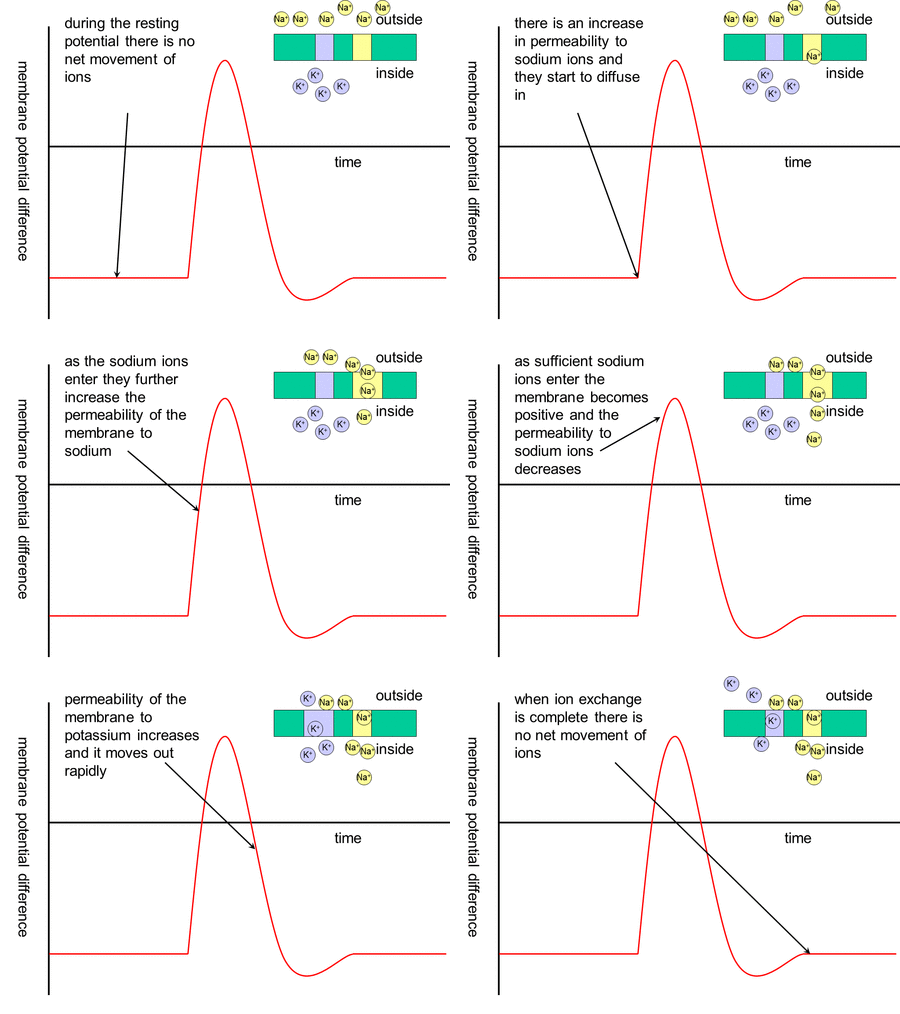
Action potential
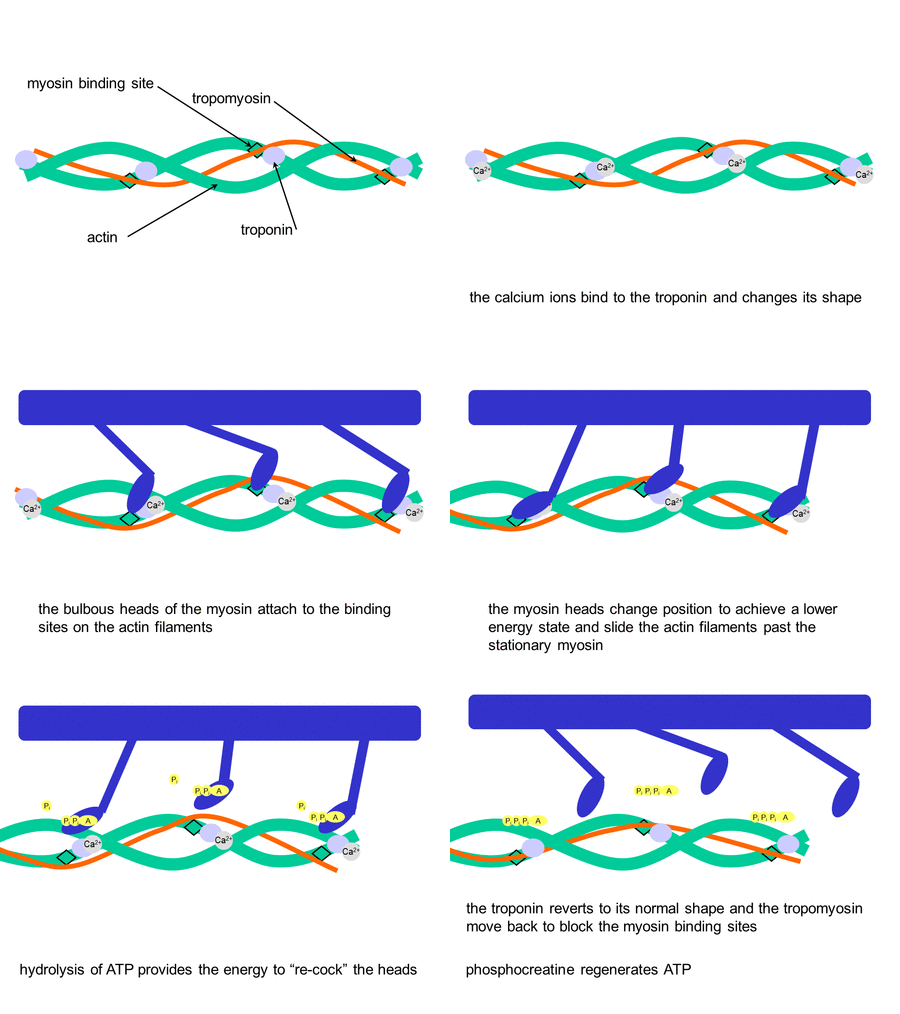
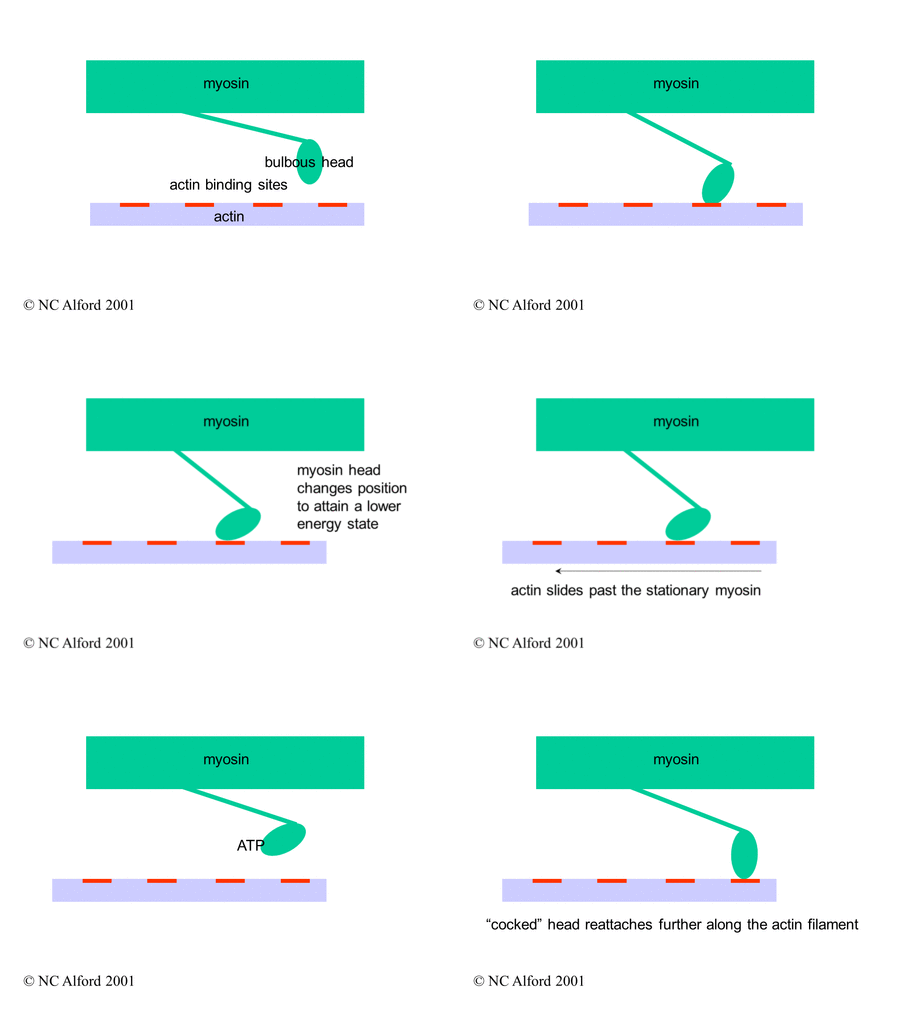
Sliding filament theory 1

Sliding filament theory 2

Tuesday, 18 March 2014

Deutsche Enthüllungsbericht

Im Moment versuche ich, meinen Enthüllungsbericht vorzubereiten. Ich hoffe, dass dies mir hilft!


Monday, 3 February 2014

2014 exam dates

June 2014
3rd pm - PSYA3 Aggression, Relationships and Sleep
9th am - GN4 Listening, Reading and Writing
9th pm - F334 Chemistry of Materials
11th am- PSYA4 Schizophrenia, Addiction, Research Methods
13th pm - BIOL4 Populations and Environment
17th pm - F335 Chemistry by Design 
20th am - BIOL5 Control in Cells and Organisms

Monday, 6 January 2014

German lesson notes 06/01/14

In the first lesson back we practised translation skills.

verletzt wurden - was injured
getragen is the past participle of tragen
der Rassismus - racism
tausende von Deutschen - thousands of Germans
der Angriff - attack
in dem/in der - in which
mit den Worten... darauf
tolerant is a cognate
Angst haben
aus anderen Ländern - from other countries
hierherkommen - to come here

One of my main issues is choice of prepositions, which I could improve by researching each preposition individually to collate their precise uses.

Wider Reading: Bangen um Michael Schumacher

Vokabel:
der Zustand - state/condition
die Verletzung - injury
voraussagen - to predict/prognosticate
sich ereignen - to take place/occur
der Felsen - rock
das Hirn/ Gehirn - brain
geschehen - to happen
der Hubschrauber - helicopter
künstlich - artificial
sicherstellen - to assure
der Sauerstoff - oxygen
erfolgreich - successful
sich verbreiten - to spread (things)

Summary:
This article is about the skiing accident suffered by Michael Schumacher in France. No other skiers were involved and Schumacher fell and hit his head on a rock. Despite wearing a helmet, he sustained a serious brain injury and was taken to hospital by helicopter. After an emergency operation, he was put into an induced coma, and doctors can only say for certain that his brain is receiving enough oxygen. The final paragraph summarises Schumacher's achievements: he is the most successful F1 driver, having been the world champion seven times, and has millions of fans who have been posting "get well soon" wishes on his website.

Frohes Neues Jahr!

I haven't made any proper resolutions this year, but if I had resolved to use this blog more, this would be a good start! I've created a study planner on Get Revising and during this session I'm going to read at least one German article from sowieso.de. Guten Rutsch ins neue Jahr!

Friday, 15 November 2013

German Word Order

Here are a few handy hints for getting word order correct in the main clause of a sentence:

  • The basic rule is time, manner, place, which means any time phrases are written first (after the verb), and information about location comes at the end of the sentence, but still before the second verb, if there is one.
    • For example: Mein englischer Brieffreund hat letzten Sommer mit seiner Familie eine Ferienwohnung direkt in Füssen gemietet.
    • Subject verb time manner place verb
  • I also noticed that mit phrases always seem to come before other manner phrases, such as the object of the sentence, as we can see in the example above.
  • Phrases can be moved to the front of the sentence to add emphasis.
    • For example: Direkt in Füssen hat mein englischer Brieffreund letzten Sommer mit seiner Familie eine Ferienwohnung gemietet.

The wider reading thing worked well...

... Or not! I think it was a good idea, but one that doesn't work too well in practice. It's not as though I haven't been doing wider reading - I have, just not with this blog in mind. I actually bought a book which is directly related to behavioural epigenetics, which is a good read, and I will attend another psychology conference next week, and went on a biology trip last Monday. In fact, right now I've just taken a break from some additional German grammar work, and my chemistry individual investigation requires me to become an expert on aspirin. Perhaps I can find another use for this blog... storage of brief revision notes and useful links, perhaps?

Saturday, 7 September 2013

Wider Reading: Behavioural Epigenetics

Grandma's Experiences Leave a Mark on Your Genes

This article introduces the idea that genetic information can be influenced by both nature and nurture, suggesting that life experiences are able to alter chemical signals to determine exactly which genes are transcribed. The field of epigenetics is concerned with  extra chemicals, such as the methyl group, which attach themselves to the genes that are necessary to produce the proteins required by the cell. Epigenetic changes can occur throughout life and can be triggered by a variety of factors, including diet, and can even be inherited, despite not actually being part of DNA itself; this is known as postnatal inheritance. A methyl group inhibits transcription of the gene it attaches to by tightening the DNA around the histone, making it much harder for DNA helicase to unzip this portion of DNA. To investigate the effect of life experiences on epigenetics, a natural experiment was conducted on rats whose mothers were either very attentive or very inattentive. This study found that genes regulating sensitivity to stress hormones were far more methylated the brains of those with inattentive mothers. This means that, for those with less attentive mothering, the genes which protect against the effects of stress were not transcribed as fully; therefore, the offspring were more susceptible to the effects of stress. In a follow up study, offspring of inattentive mothers were placed with attentive mothers and vice versa, and again the rats raised by the inattentive mothers had the most methylation in their anti-stress genes. Studies of human blood have shown that these changes can be present in humans too, and this could lead to the development of drugs to control or remove methyl groups, which may be useful in treating disorders such as depression. However, there are ethical issues with this type of treatment, most notably, is it right to alter inherited information?

Friday, 6 September 2013

Year 13

Despite not really using this blog during year 12, I managed to do well in my AS studies, gaining four A grades. This year I will use the blog for a different purpose: housing links to a selection of "wider reading" articles. Each fortnight, I will aim to read at least one article which relates to each of my subjects, as well as summarising the main points I have learnt from it. I hope that this practice will enable me to retain my high standard from year 12 in my A2 studies.

Wednesday, 21 November 2012

Psychology Conference 12/11/12

I had no lessons last Monday because I attended a conference at the Colston Hall, titled : "Science and Pseudoscience". Throughout the day we had talks, ranging in length from 30 minutes to about an hour. First of all we were told to be sceptical, then the psychologist who organised the event defended the integrity and importance of lab experiments (probably the most relevant part to my studies, but not the most interesting). "Dr Dance" Peter Lovatt told us some surprising things about the psychology of dance and attraction, then after a lunch break, we were treated to some magic tricks and learned that psychology could help change the world. Finally, it was time for the most humorous part of the day, hypnosis, in which a boy was stuck with his finger up his nose and other participants cuddled up to each other - it was hilarious!

Friday, 9 November 2012

German lesson 09/11/12

After relative pronouns last lesson, today we studied separable verbs, for example, "aufstehen". In this case, the separable part is "auf"; in a present tense sentence, it moves to the end:

Ich stehe um 7 Uhr auf.

In the future tense, the separable verb sticks together and goes to the end of the sentence:

Am Montag sollte ich um 7 Uhr aufstehen.

In the past tense, the verb parts are joined but with -ge- in the centre, and it goes to the end:

Gestern bin ich um 7 Uhr aufgestehen.

EDIT: After lesson on future tense, 14/11/12

In future tense sentences in which "zu" is required, the -zu- is placed in between the verb parts:

Am Montag hoffe ich, um 7 Uhr aufzustehen.

EDIT: After starting year 13, 15/11/13

If the verb is sent to the end in a present tense sentence, the verb parts are joined, but the present tense verb ending is retained.

Wenn ich um 7 Uhr aufstehe, fühle ich mich müde.

Introduction to my study blog

This is my new blog, specifically to do with my Advanced Level studies. I created it to help with my self-motivation; at the moment, it seems like as soon as I switch the laptop on, I am consumed by the wonders of irrelevant internetting, so much so that I have been failing to complete the recommended volume of additional work outside school. I hope that the things I post here will be useful and potentially become revision materials.